Learning Objectives of the Module
After the successful completion of this module, you will be able to:
Remember & Understand
• Identify Explain the regulatory framework governing nutritional supplements and describe why
legally marketed supplements may still present anti-doping risks.
• Describe the principles of supplement verification, including label interpretation, third-party
certification programs, the WADA Prohibited List, and the role of independent verification tools in
reducing the risk of inadvertent doping.
Apply & Analyze
• Apply a structured supplement verification protocol to evaluate nutritional supplements by
analysing product labels, identifying high-risk supplement categories, assessing ingredients against
the WADA Prohibited List, and using appropriate verification resources.
• Analyse supplement-related information critically by distinguishing between marketing claims,
regulatory compliance, scientific evidence, and anti-doping risk in order to support informed
decision-making.
Evaluate & Create
• Evaluate the suitability of nutritional supplements for individual athletes by integrating scientific
evidence, anti-doping regulations, product verification, ethical considerations, and athlete-specific
needs into a documented risk assessment.
• Develop evidence-based recommendations and educational strategies that promote safe
supplement practices, minimize the risk of inadvertent doping, and support ethical decision-making
within the athlete support team.
Lesson resources
Module 4 in PDF format
Module 4 in Audio format
1. Introduction
This chapter represents Module 4 of the AntiDop educational curriculum for Athletes Support Personnel (ASP), addressing food-first nutrition, supplement types and performance claims, and risks associated with supplement use. Its primary purpose is to provide practical, evidence-based, and operational guidance on systematically assessing nutritional supplements before they are recommended, purchased, or consumed.
This module should be read in conjunction with the preceding module on Sports Nutrition Supplements (Module 1), which provides the scientific background necessary to understand the role of supplements in sport. That chapter introduces the definitions and classification of nutritional supplements, their physiological functions, evidence for efficacy, practical applications, and the general principles of supplement safety, quality assurance, and contamination risk. Building upon that foundation, the present module does not repeat the scientific rationale for supplement use, but instead focuses on the practical competencies required by Athlete Support Personnel (ASP) to critically evaluate supplements, minimise anti-doping risks, and support informed decision-making in everyday practice.
Unlike general public-facing advice, this chapter is written for coaches, physicians, pharmacists, nutritionists, strength and conditioning professionals, parents, and other ASPs, who share ethical, professional, and sometimes legal responsibility for preventing inadvertent doping and health harm.
2 Supplements in sports & Safety
2.1. Prevalence of supplement use in sport and the illusion of safety
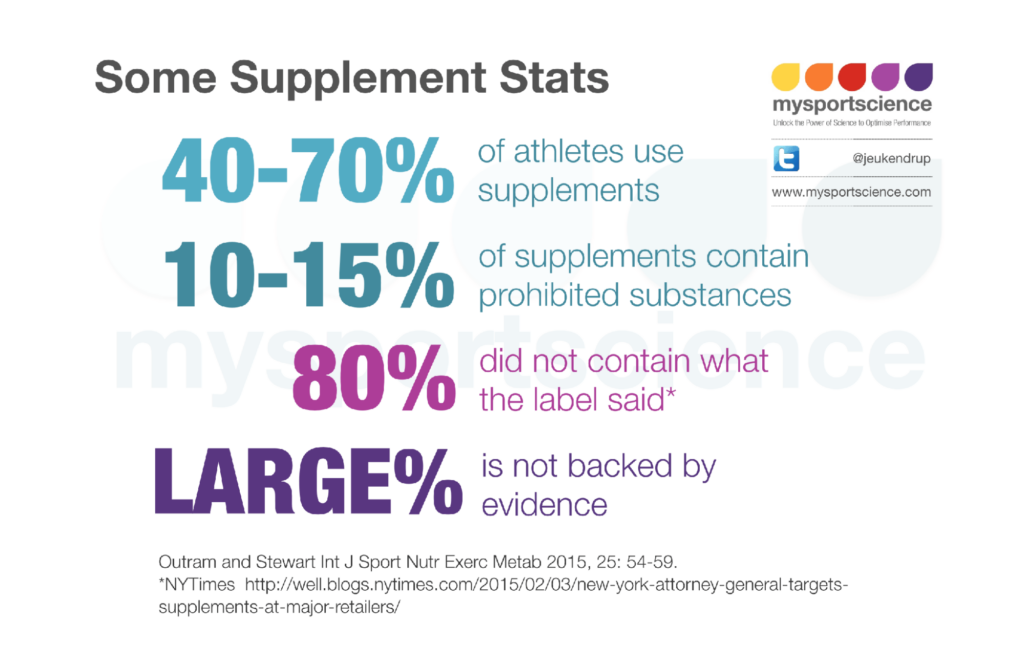
Dietary supplement use is deeply embedded in contemporary sports culture. Epidemiological data consistently demonstrate a high prevalence of supplement consumption among athletes, ranging from 60% in recreational sport to over 80–90% in elite and professional settings. This pattern is observed across age groups, sport disciplines, and competitive levels, and often begins during adolescence (Suzic Lazic et al., 2011; Dikic et al., 2021).
Despite this widespread use, supplements are frequently perceived by athletes and ASPs as inherently safe, “natural,” or equivalent to food. This perception is not supported by scientific or regulatory evidence. Unlike medicinal products, dietary supplements are not required to undergo pre-market evaluation for efficacy, safety, or contamination in most jurisdictions. As a result, the risk profile of supplements is fundamentally different from that of pharmaceuticals, yet this distinction is often poorly understood by non-medical ASPs.
Crucially, supplement use is rarely driven by evidence-based nutritional need alone. Instead, it is influenced by performance pressure, social norms within teams, marketing claims, and anecdotal practices transmitted between athletes. This environment creates fertile ground for uninformed decision-making, where verification is replaced by trust in brand reputation, peer experience, or online endorsements.
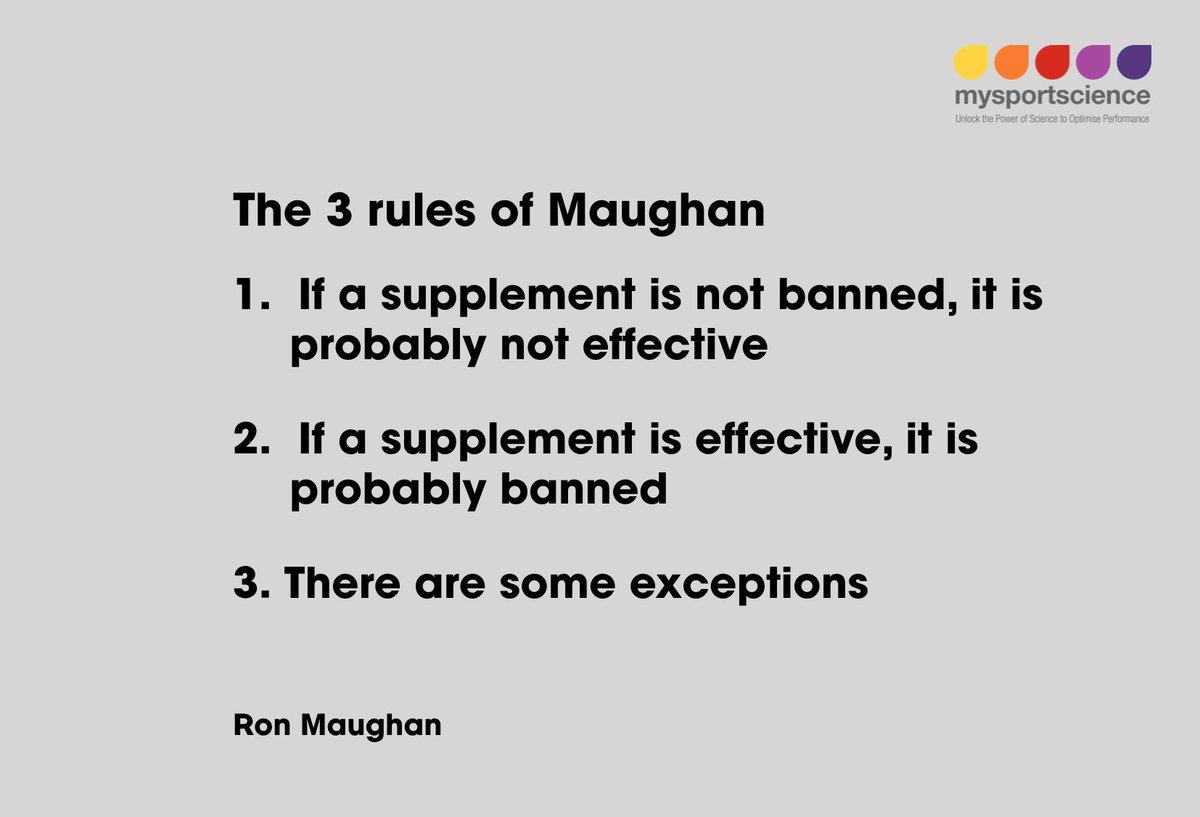
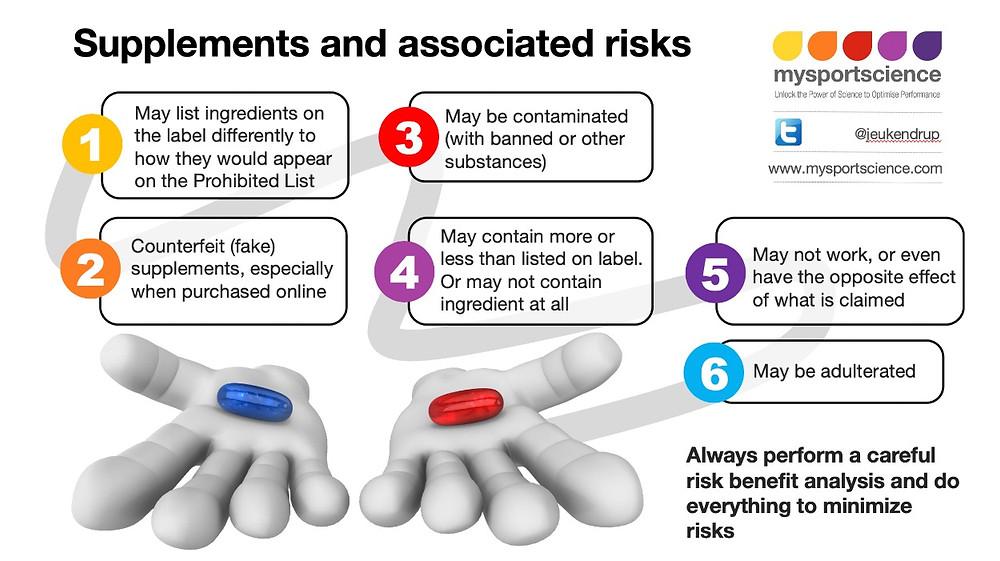
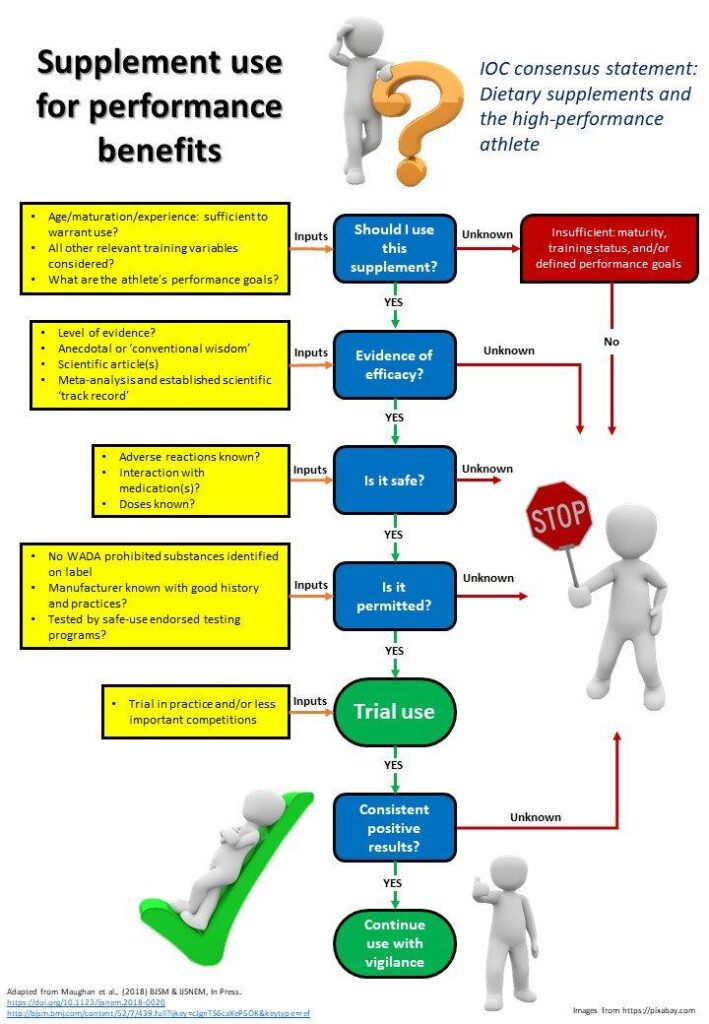
Years ago, Ronald Maughan — one of the leading scientists in sports nutrition — presented a now-widely-used infographic on supplement risk that is still available on the WADA website. This visual framework has been influential in explaining why supplements pose varying levels of anti-doping risk and why careful screening, education, and risk management are essential for athletes and Athlete Support Personnel.
2.2 Inadvertent doping as a systemic, not individual, failure
Anti-doping rule violations linked to supplements are classified as unintentional or inadvertent doping cases. Analytical studies performed by WADA-accredited laboratories and independent research groups have repeatedly identified prohibited substances in supplements that were not declared on the product label. These substances include anabolic agents, stimulants, selective androgen receptor modulators (SARMs), and prohormones, often present in trace or pharmacologically relevant amounts.
From an ethical and educational perspective, it is essential to emphasize that inadvertent doping is not merely an athlete failure, but a systemic outcome of inadequate regulation, insufficient education, and lack of structured verification processes. Athletes rarely select supplements in isolation. Decisions are commonly shaped—or explicitly endorsed—by ASPs such as coaches, strength and conditioning professionals, nutritionists, medical doctors, or parents.
Therefore, the inability of ASPs to critically assess supplement safety represents a shared risk factor, directly undermining anti-doping prevention efforts. AntiDop education explicitly addresses this gap by repositioning ASPs as gatekeepers of risk, rather than passive observers of athlete behaviour.
2.3. Strict liability and the asymmetry of consequences
Under the World Anti-Doping Code, athletes are subject to the principle of strict liability, meaning that they are fully responsible for any prohibited substance found in their biological samples, regardless of intent, source, or level of negligence. While this principle serves the integrity of sport, it creates a pronounced asymmetry between decision-making influence and disciplinary consequences.
In practice, athletes bear the full burden of sanctions—disqualification, suspension, reputational damage, and financial loss—while ASPs who advised or tolerated supplement use rarely face direct consequences unless intentional complicity is demonstrated. This asymmetry places an even greater ethical obligation on ASPs to apply due diligence when discussing or recommending supplements.
2.4. Expanding the role of ASPs: from advisors to risk managers
Modern anti-doping frameworks increasingly emphasize education, prevention, and shared responsibility. Within this paradigm, ASPs are no longer viewed merely as technical advisors, but as risk managers within the athlete’s performance ecosystem.
Effective risk management in relation to supplements requires:
- Understanding regulatory limitations
- Recognizing high-risk product categories
- Interpreting labels beyond marketing language
- Using verification tools appropriately
- Documenting decision-making processes
This module therefore treats supplement verification as a core professional skill, comparable in importance to load management, injury prevention, or medication oversight.
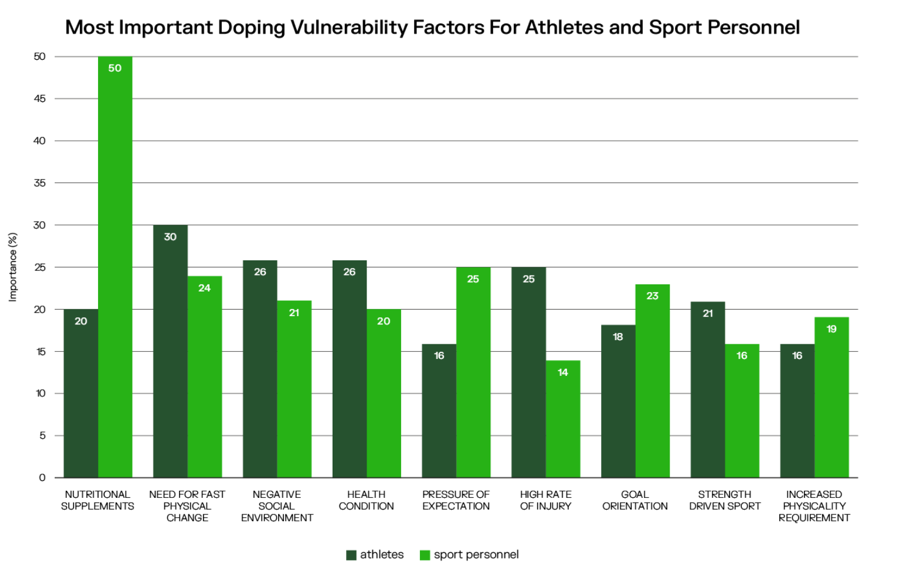
In paper published by WADA about athlete doping vulnerabilities sport personnel are far more likely than athletes to consider the use of nutritional supplements as increasing athlete vulnerability and particularly medical personnel (WADA, 2022).
2.5. Educational implications for AntiDop Training Missions
Before ASPs can learn how to check supplements, they must clearly understand why such checks are necessary, what is at stake, and how their role directly influences athlete outcomes (Backhouse & McKenna, 2011).
By framing supplement verification as an ethical, professional, and preventive competence, this module aligns with the broader AntiDop project goals of integrity, athlete protection, and informed decision-making.
3. Regulatory status of nutritional supplements: what asps must understand
3.1. Educational implications for AntiDop Training Missions
For Athletes Support Personnel (ASP), understanding how nutritional supplements are regulated is a foundational competence for risk assessment. Many of the misconceptions surrounding supplement safety originate not from ignorance of the Prohibited List, but from misinterpretation of regulatory approval. A product being legally sold on the market is often incorrectly equated with being safe, effective, or suitable for athletes subject to anti-doping controls.
From a regulatory standpoint, dietary supplements occupy a grey zone between food and medicine, with significantly lower oversight compared to pharmaceuticals. This regulatory positioning directly explains why supplements represent one of the most common sources of inadvertent doping.
3.2. Supplements are regulated as foods, not medicines
In the European Union, dietary supplements are regulated under Directive 2002/46/EC, which classifies them as foodstuffs intended to supplement the normal diet (European Parliament and Council, 2002). Similar approaches exist in the United States under the Dietary Supplement Health and Education Act (DSHEA, 1994) and in many other jurisdictions worldwide. (U.S. Congress, 1994).
As a consequence of this classification:
- Manufacturers are not required to prove efficacy before placing a product on the market
- Pre-market testing for prohibited substances is not mandatory
- Safety assessment is largely based on ingredient history rather than finished-product analysis
- Regulatory authorities primarily intervene after problems are identified (post-market surveillance)
This framework stands in stark contrast to medicinal products, which must undergo rigorous pre-clinical testing, clinical trials, batch consistency testing, and pharmacovigilance.
For ASPs, the key implication is clear: regulatory approval does not equal anti-doping safety.
Drag-and-Drop Matching Exercise
Drag one answer into each empty space. Four options are distractors.
Regulatory frameworks
Answer bank
3.3. Post-market surveillance and its limitations
Most supplement regulatory systems rely heavily on post-market surveillance, meaning that authorities act only after adverse events, consumer complaints, or laboratory findings emerge. This reactive model creates several vulnerabilities relevant to sport:
- Contaminated products may remain on the market for long periods before detection
- Athletes may be exposed before recalls are issued
- Enforcement resources vary widely between countries
- Cross-border online sales complicate accountability and traceability
Scientific investigations have demonstrated that contaminated supplements are often identified only after adverse analytical findings in athletes, rather than through routine regulatory control.
3.4. Variability between jurisdictions: a global risk factor
Although international frameworks such as the Codex Alimentarius aim to harmonize food supplement standards, substantial regulatory differences persist between regions:
- Ingredient permissibility varies across countries
- Maximum allowable doses differ
- Enforcement intensity and inspection frequency are inconsistent
For example, substances banned as novel foods or medicines in the EU may be legally included in supplements sold elsewhere and imported via online platforms. Products purchased through international e-commerce channels often bypass national food safety authorities altogether.
From an anti-doping perspective, this means that:
- The country of manufacture is often more relevant than the country of sale
- Online availability significantly increases contamination and mislabelling risk
- Traceability and legal recourse are limited in case of adverse findings
ASPs must therefore treat supplements obtained outside regulated national supply chains as high-risk by default.
3.5. Claims regulation and marketing language
Another critical regulatory gap concerns health and performance claims. While the EU restricts authorized health claims through EFSA evaluation, enforcement in practice is uneven, particularly in digital marketing environments. Common patterns include:
- Vague performance-related language (“supports strength,” “enhances focus”)
- Implied pharmacological effects without explicit claims
- Athlete testimonials substituting for scientific evidence
These marketing strategies often exploit regulatory loopholes while creating false perceptions of legitimacy among athletes. ASPs must be trained to distinguish regulatory compliance from scientific credibility.
3.6. The anti-doping relevance of manufacturing standards
Good Manufacturing Practice (GMP) compliance is frequently cited by supplement companies as a marker of quality. While GMP certification improves hygiene and consistency, it does not guarantee absence of prohibited substances. Key limitations include:
- GMP focuses on process control, not anti-doping testing
- Cross-contamination can still occur in multi-product facilities
- GMP standards differ internationally
Therefore, GMP should be viewed as a minimum requirement, not a sufficient safeguard for athletes subject to doping control. GMP reduces manufacturing variability, not analytical uncertainty.
3.7. Implications for ASP education and decision-making
For AntiDop Training Missions, this regulatory overview serves a critical educational purpose:
- It explains why contamination is structurally possible, even without malicious intent
- It counters the assumption that “legal” equals “safe”
- It prepares ASPs to critically evaluate products before relying on labels or certifications
Most importantly, it reframes supplement verification as a risk-based process, grounded in regulatory reality rather than trust.
Under the World Anti-Doping Code, what principle makes athletes responsible for substances found in their samples regardless of intent?
Strict liability.
Why does a supplement’s legal market status not guarantee anti-doping safety?
Supplements are regulated as foods and do not require pre-market testing for prohibited substances.
4. Interpreting supplement labels: beyond surface reading
4.1. Why label literacy is a core anti-doping skill
For Athletes Support Personnel (ASP), the ability to correctly interpret supplement labels represents one of the most critical and underestimated anti-doping competencies. Labels are often perceived as transparent disclosures of product composition; in reality, they are regulatory documents shaped as much by legal permissibility and marketing strategy as by scientific accuracy.
From an anti-doping perspective, supplement labels do not function as guarantees of safety. Instead, they represent starting points for risk assessment, requiring informed scrutiny, contextual knowledge, and cross-referencing with external sources such as the WADA Prohibited List and verification databases.
A superficial reading of labels—focused only on brand reputation, key ingredients, or marketing claims—has been repeatedly associated with inadvertent doping cases. Effective label interpretation therefore demands a systematic and skeptical approach, particularly for ASPs who advise or influence athlete decisions.
4.2. Mandatory label elements: minimum requirements, not proof of safety
In most jurisdictions, food supplement regulations require the presence of specific information on product labels. These typically include:
- Complete list of ingredients
- Quantitative declaration of active ingredients per serving
- Recommended daily dose
- Name and address of the manufacturer or distributor
- Batch or lot number
- Expiry or “best before” date
While the presence of these elements is legally required, their inclusion alone does not indicate product safety or anti-doping suitability. Numerous contaminated products identified in scientific studies were fully compliant with labeling regulations at the time of sale. For ASPs, the absence of any mandatory element should be treated as a clear exclusion criterion, but its presence should never be interpreted as reassurance.
The German Sport University Cologne, through its Center for Preventive Doping Research, developed the Label Check as a first-level screening service that must be passed before a supplement is eligible for subsequent chemical analysis for the presence of prohibited substances. This approach supports ASP in identifying high-risk supplements that should be avoided. Products are excluded from analysis if the label indicates (Koelnerliste, 2023):
- WADA-prohibited or monitored substances (or their synonyms)
- Ingredients considered doping-relevant by WADA
- Botanicals with known contamination risk (e.g. hemp, citrus aurantium)
- Hormone – or stimulant-suggestive claims (e.g. “andro,” “testo,” “anabol”)
- ngredients marketed for doping-related effects
- Ingredients previously linked to positive doping cases
- Misleading claims of being “guaranteed doping-free”
- Active components or precursors of prohibited substances
4.3. Ingredient lists: where risk often hides in plain sight
4.3.1. Order and quantitative relevance
Ingredients on supplement labels are typically listed in descending order by weight, yet this provides limited insight into pharmacological relevance. Small quantities of highly potent substances may still produce measurable metabolites in urine or blood. ASPs should therefore avoid assuming that “low on the list” equates to “low risk,” especially for stimulants, hormone modulators, or substances with low detection thresholds.
4.3.2. Botanical ingredients and plant extracts
Botanical components represent a particular challenge for label interpretation. Ingredients may be listed using:
- Latin binomial nomenclature
- Common plant names
- Extract ratios without clear standardisation
- Some plants naturally contain substances with stimulant or hormone-like effects or can produce compounds that resemble prohibited substances. In addition, the number of active compounds in plant extracts can vary greatly depending on how the plant is processed and manufactured. For this reason, Athlete Support Personnel should consider multi-ingredient herbal supplements as higher risk, especially when they are marketed for performance enhancement, fat loss, or increased energy.
- A good example is Tribulus terrestris. This plant does not naturally contain anabolic steroids, but it is widely promoted as a “natural testosterone booster.” Because Tribulus alone rarely produces strong effects, some manufacturers have added undeclared substances, including anabolic steroids or prohormones, while using Tribulus as a “natural” cover ingredient. As a result, Tribulus supplements have been repeatedly linked to steroid-positive doping cases. Laboratory studies confirm that chemical testing can detect these undeclared substances, reinforcing the need for strict quality control and caution when recommending Tribulus-containing supplements to athletes.
4.4. Proprietary blends: a structural red flag
One of the most significant labeling practices relevant to anti-doping risk is the use of proprietary blends. These blends allow manufacturers to list multiple ingredients under a single collective weight without disclosing the exact amount of each component.
From an ASP and anti-doping standpoint, proprietary blends present several critical problems:
- They prevent accurate assessment of ingredient dosage
- They obscure potentially pharmacologically active quantities
- They complicate cross-checking against the Prohibited List
- They reduce accountability and traceability
Scientific and regulatory experts widely regard proprietary blends as incompatible with informed risk assessment in sport. ASPs should systematically discourage athletes from using supplements that rely on this labeling practice, particularly in high-risk categories such as pre-workouts, fat burners, and “testosterone boosters.”
4.5. Chemical synonyms, alternative names, and masking strategies
Prohibited substances and their precursors may appear on labels under alternative chemical names, outdated terminology, or functional descriptors. This practice is not necessarily illegal but can mislead non-specialist readers. Common masking strategies include:
- Use of chemical synonyms unfamiliar to non-chemists
- Reference to precursor compounds rather than final metabolites
- Use of functional descriptions instead of explicit substance names
Because the WADA Prohibited List is organized by substance classes and mechanisms of action, ASPs must develop familiarity with functional categories (e.g., stimulants, beta-2 agonists, anabolic agents) rather than relying solely on name recognition.
4.6. “Natural,” “herbal,” and “plant-based”: misleading reassurance
Marketing descriptors such as natural, herbal, plant-based, or traditional have no protective value in anti-doping contexts. Numerous prohibited substances originate from plants or can be synthesized from natural precursors. Scientific evidence clearly demonstrates that:
- Natural origin does not prevent pharmacological activity
- Herbal supplements are not inherently safer than synthetic ones
- Traditional use does not equate to anti-doping compatibility
ASPs must actively challenge the assumption that “natural” equals “allowed” and educate athletes accordingly.
4.7. Dosage instructions and misuse risk
Labels frequently include recommended dosages that are not evidence-based, particularly for performance-oriented products. In some cases, athletes may exceed suggested doses due to perceived tolerance, performance expectations, or peer advice. Excessive intake increases:
- Health risks
- Probability of detectable prohibited metabolites
- Variability in individual metabolic responses
ASP guidance should therefore include not only ingredient evaluation but also critical appraisal of dosing instructions, especially in combination products.
4.8. Red flags on supplement labels: a practical summary for ASPs
ASPs should consider a supplement high risk if the label includes any of the following:
- Proprietary blends
- Aggressive performance or hormonal claims
- Multiple botanical extracts with unclear standardization
- Claims of rapid muscle gain, fat loss, or energy surges
- Absence of batch or lot identification
- Ambiguous ingredient naming
These features do not prove contamination but significantly increase uncertainty, which is incompatible with anti-doping risk management.
4.9. Educational implications for AntiDop Training Missions
This section equips ASPs with the analytical tools needed to transform label reading from a passive activity into an active risk-screening process. Label literacy is not about memorization, but about developing a structured, questioning mindset aligned with anti-doping principles. Within AntiDop Training Missions, this content should be reinforced through:
- Practical label-reading exercises
- Case-based discussions
- Comparison of low-risk vs high-risk product labels
5. Identifying high-risk supplement categories
5.1. Why category-based risk assessment is necessary
While individual ingredient analysis is essential, it is often insufficient as a first-line screening strategy for Athletes Support Personnel (ASP). In real-world settings, ASPs are frequently confronted with time constraints, incomplete information, and products with complex formulations. Under such conditions, category-based risk assessment represents a pragmatic and evidence-informed approach.
Scientific evidence from anti-doping laboratories, surveillance studies, and regulatory investigations consistently demonstrates that supplement contamination is not randomly distributed across the market. Instead, it clusters around specific product categories that promise rapid, visible, or pharmacologically mediated effects. Recognizing these categories allows ASPs to prioritize caution, even before detailed label analysis.
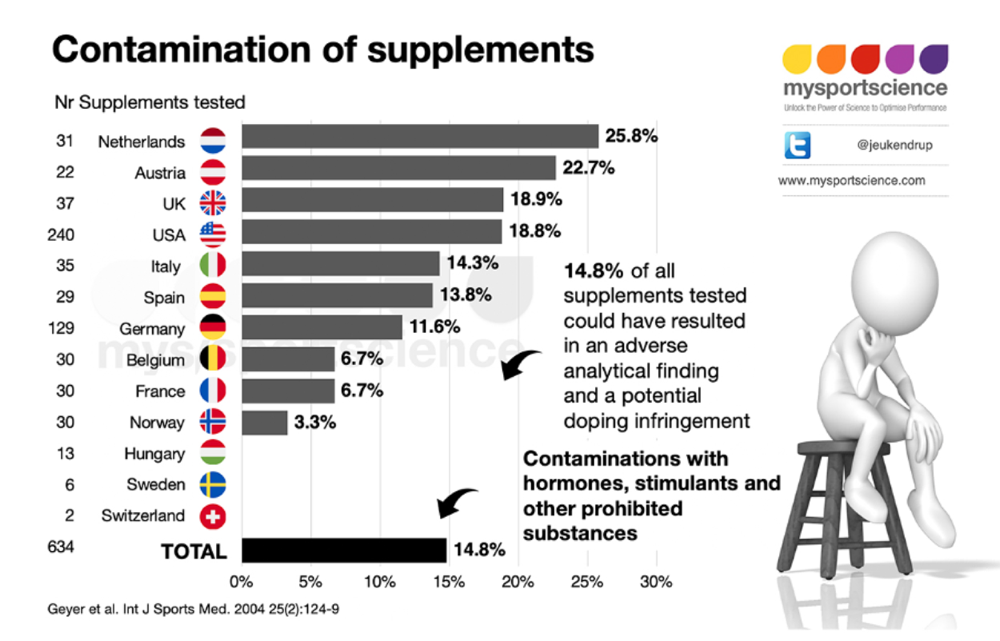
The most widely cited scientific study on supplement contamination is the international investigation by Hans Geyer and colleagues, in which 634 non-hormonal nutritional supplements purchased in 13 countries were chemically analyzed and 94 (14.8 %) were found to contain undeclared anabolic-androgenic steroids (Geyer et al., 2004).
5.2. Pre-workout supplements
Pre-workout formulations are among the highest-risk supplement categories in sport. They are typically marketed to enhance energy, focus, strength, and training intensity, and frequently contain complex multi-ingredient blends. (Dikic et al., 2023). Key risk characteristics include:
- High prevalence of stimulants and stimulant analogues
- Frequent use of proprietary blends
- Inclusion of novel or poorly characterized compounds
- Aggressive marketing focused on immediate performance effects
Analytical studies have repeatedly identified undeclared stimulants and stimulant-like substances in pre-workout products, including compounds structurally related to substances prohibited under the WADA Prohibited List. Even when declared ingredients are permitted, batch-to-batch variability and contamination remain significant concerns.
For ASPs, the default position should be that pre-workout supplements represent a high-risk category, requiring exceptional justification and verification.
5.3. Fat burners and weight-loss products
Fat burners and weight-loss supplements represent another category with a disproportionately high association with prohibited substances. These products often target metabolic rate, appetite suppression, or lipolysis—processes closely linked to the pharmacological action of stimulants and hormone modulators. Common risk factors include:
- Presence of sympathomimetic compounds
- Use of botanical stimulants with variable alkaloid content
- History of undeclared pharmaceutical adulterants
- Marketing directed at rapid body composition changes
Numerous cases of inadvertent doping have been linked to fat burners contaminated with banned stimulants or their analogues. A well-publicized anti-doping case involved a professional handball player who tested positive after using a commercial weight-loss supplement (SLC Advance) that was later found to contain undeclared sibutramine, a prohibited substance. The case illustrates how slimming and fat-loss supplements represent a particularly high doping risk.
This slide shows that, according to high-quality evidence summarized by Maughan et al., no weight-loss supplement produces clinically meaningful fat loss, as most products demonstrate only small to trivial effects, with adequate protein intake being the only intervention with modest supportive evidence when combined with diet and exercise.
| Supplement | Proposed mechanism of action | Evidence for efficacy |
|---|---|---|
| Gaining LBM* | ||
| ProteinUsually comprised isolated proteins from various sources (whey and soy most common)Recommended daily dose: 1.6 g protein/kg/day optimal (up to 2.2 g/kg/day with no adverse effects)Recommended per-meal doses: 0.3–0.5 g protein/kg (3–4 times per day and in close temporal proximity to exercise, with postexercise being consistently shown to be effective) | Enhances lean mass gains when ingested during programmes of resistance training due to increased provision of building blocks (amino acids) and leucineas a trigger for a rise in muscle protein synthesis and suppression of muscle protein breakdown | Meta-analyses focusing on younger and older participantshave shown positive effects enhancing gains in muscle mass,161 162 but effects are not large. |
| Leucine | Stimulates muscle protein synthesis and suppresses proteinbreakdown (possibly through insulin) | Short-term mechanistic data available,137 but no long-termtrials showing efficacy163 |
| Losing fat mass † | ||
| ProteinFrom increased dietary sources or supplemental isolated proteins | Enhances fat mass loss and promotes retention of leanmass | Meta-analyses confirm small but significant effects of greaterdietary protein in weight loss to enhance fat mass loss andpromote lean mass retention. |
| Pyruvate | No data | Small to trivial effect |
| Chromium | Potentiates biological actions of insulin | No effect |
| Green tea (polyphenol catechins and caffeine) | Thermogenic agent and/or lipolytic enhancing agent | Small to trivial effect |
| α-Lipoic acid | No clear role, but possible antioxidant | Small to trivial effect |
| Conjugated linolenic acid | Changes membrane fluidity favouring enhanced fat oxidation | Small to trivial effect |
| Konjac fibre (glucomannan) | Water-soluble polysaccharide—dietary fibre | Small to trivial effect |
| Omega-3 polyunsaturated fatty acids | No clear role, but possible appetite suppression, improved blood flow and/or modulator of gene expression | Small to trivial effect |
| Chitosan | Lipid-binding agent to reduce lipid absorption | Small to trivial effect |
| *In combination with a progressive resistance exercise programmes.†In combination with an exercise-induced and/or diet-induced energy deficit. | ||
5.4. Muscle builders, testosterone boosters, and prohormone products
Supplements marketed for muscle gain, hormonal support, or testosterone enhancement constitute a critical risk category, even when they do not explicitly reference anabolic effects. Products in this category may:
- Contain undeclared anabolic agents or prohormones
- Include precursors that metabolize into prohibited substances
- Be deliberately adulterated to enhance perceived effectiveness
Scientific analyses have demonstrated that supplements labeled as “natural testosterone boosters” have, in some cases, contained anabolic-androgenic steroids or SARMs not disclosed on the label. The risk is amplified by the fact that even trace amounts may result in positive anti-doping findings.
ASPs should treat this category as incompatible with anti-doping risk management, except in rare, medically supervised contexts.
A 2022 Australian market survey commissioned by Sport Integrity Australia analyzed 200 uncertified sports supplements bought online to mimic a typical athlete purchase. Thirty-five percent contained ≥1 WADA Prohibited Substance—roughly a 1-in-3 purchase risk for an uncertified product. Contamination was highest in muscle builders (53%), fat burners (49%), pre-workouts (34%), and nootropics (40%), while creatine (0%) and protein powders (7%) were lower risk in this sample. Critically, 57% of positive products did not declare the prohibited substances on the label/website, meaning label-checking alone is an unreliable safeguard. Most detections (≈83%) were naturally occurring stimulants in botanical matrices (e.g., octopamine/phenethylamine/higenamine), but two products contained high levels of synthetic stimulants (including amphetamine-type agents), consistent with deliberate adulteration rather than incidental cross-contamination. The authors conclude that ongoing education and independent batch-tested certification are central harm-reduction strategies for athletes who choose to use supplements (Maughan et al., 2018).
5.5. Sexual performance and vitality supplements
Although often perceived as unrelated to sport performance, sexual performance and vitality supplements represent a well-documented high-risk category. Regulatory authorities and laboratories have repeatedly identified undeclared pharmacologically active substances in these products. Risks include:
- Presence of synthetic drug analogues
- Lack of quality control
- Products manufactured outside regulated supply chains
Athletes may use these supplements without consulting ASPs, underestimating their relevance to doping control. ASP education should therefore explicitly include this category, emphasizing that off-field supplement use can still result in adverse analytical findings.
5.6. Cognitive enhancers and focus supplements
Supplements marketed for cognitive enhancement, alertness, or focus are increasingly popular, particularly in sports requiring precision or sustained attention. These products often overlap conceptually with stimulant categories. Risk factors include:
- Use of stimulant-like compounds
- Ambiguous labeling of psychoactive ingredients
- Inconsistent regulatory oversight
Given the sensitivity of stimulant detection thresholds, even marginal contamination can pose a risk. ASPs should apply heightened scrutiny to this category, especially during in-competition periods.
5.7. Products marketed as “advanced,” “hardcore,” or “extreme”
Marketing language itself can serve as a risk indicator. Products described using terms such as hardcore, extreme, pro, or advanced frequently aim to differentiate themselves through perceived potency. Such positioning often correlates with:
- Higher likelihood of aggressive formulations
- Reduced transparency
- Targeting of experienced or competitive athletes
While not definitive evidence of contamination, this marketing strategy warrants elevated caution and verification.
5.8. Lower-risk supplement categories: relative, not absolute safety
Certain supplement categories are generally considered lower risk, particularly when they involve single-ingredient products with well-established nutritional roles (e.g., vitamins, minerals, basic carbohydrates). However, it is critical to emphasize that:
- Lower risk does not mean risk-free
- Manufacturing practices still matter
- Cross-contamination remains possible
ASP guidance should reflect relative risk, not categorical safety.
5.9. How to Use the ABCD Supplement Classification to Support Decision-Making
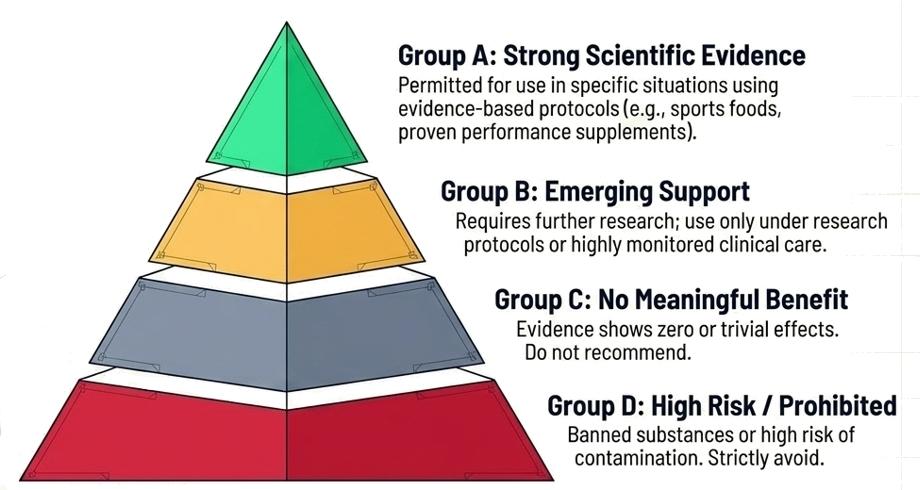
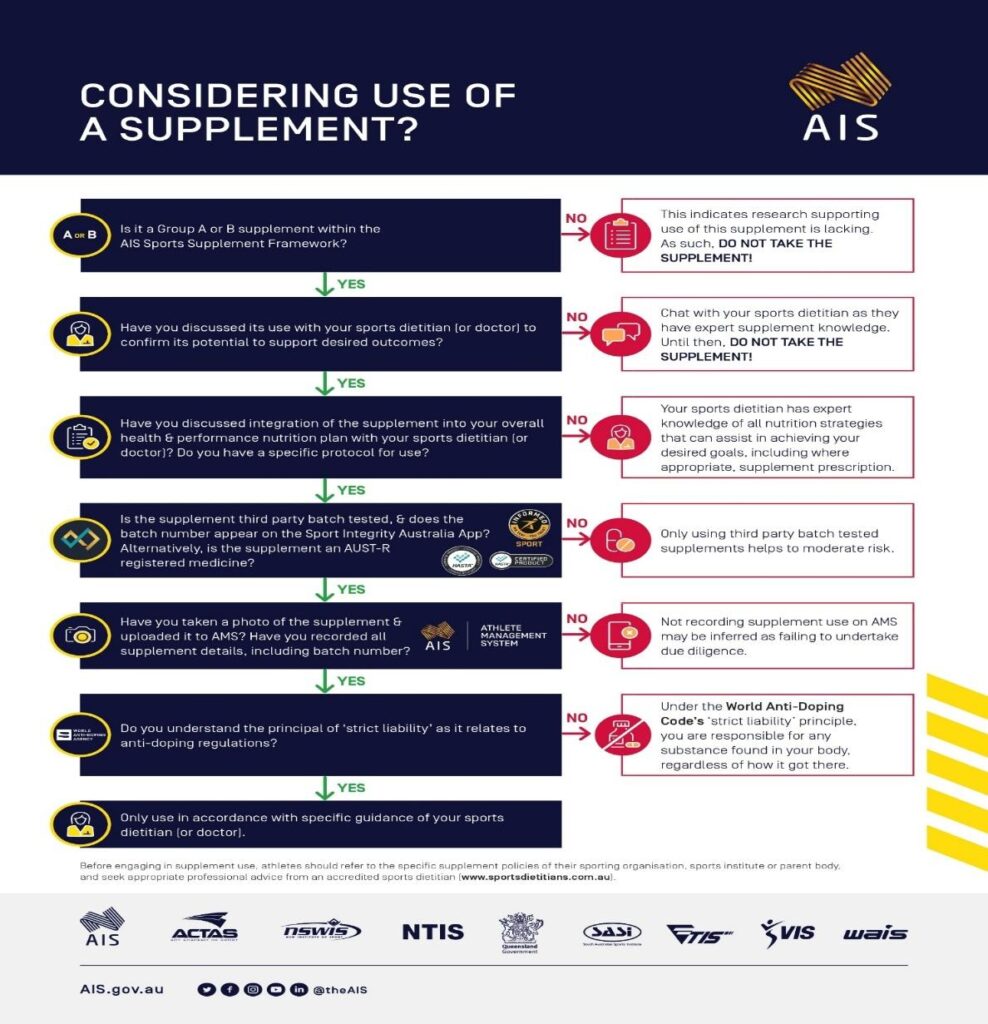
The AIS ABCD Supplement Classification (Figure 6), developed by the Australian Institute of Sport, is a practical framework that groups supplements according to the strength of scientific evidence and their anti-doping risk, ranging from evidence-supported, low-risk products (Groups A and B) to ineffective (Group C) and prohibited or high-risk supplements (Group D). By clearly identifying substances and product categories that pose a significant doping risk—particularly those in Group D—this system enables Athlete Support Personnel to develop a structured supplementation strategy, focusing on safer, evidence-based options from Groups A and, where appropriate, B, while minimizing the risk of inadvertent anti-doping rule violations (Australian Institute of Sport, 2026).
5.10. Practical implications for ASP decision-making
Category-based risk identification enables ASPs to:
- Rapidly screen products before deeper analysis
- Prioritize verification resources
- Communicate risk clearly to athletes
This approach aligns with preventive anti-doping strategies, where avoidance of high-risk categories often provides greater protection than attempting to manage complex formulations.
How can over-reliance on protein supplements negatively impact an athlete’s overall diet quality?
It may displace whole-food sources that provide fibre, vitamins, and minerals.
Which group of athletes is at the highest risk for iron-deficiency anaemia?
Endurance and female athletes.
6. Verification Tools & Databases
6.1. Why verification tools are necessary but insufficient
Given the structural limitations of supplement regulation and the documented prevalence of contamination, independent verification tools have become a central component of anti-doping risk reduction. These tools aim to assist athletes and Athletes Support Personnel (ASP) in identifying products with a lower likelihood of containing prohibited substances.
However, it is essential to state clearly: no verification tool can guarantee that a supplement is free from all prohibited substances.
Verification tools are designed to reduce risk, not eliminate it. Misunderstanding their scope and limitations can create a false sense of security, which paradoxically increases doping risk.
Why do they use them?
6.2. Third-party certification programs
6.2.1. What third-party certification actually means
Third-party certification programs involve independent organizations that test supplements for the presence of prohibited substances and, in some cases, audit manufacturing processes. These programs are not regulatory authorities; participation is voluntary and paid for by manufacturers.
Typical components of reputable certification schemes include:
- Analytical testing for substances on the WADA Prohibited List
- Batch or lot-specific testing (in some programs)
- Manufacturing facility audits
- Publicly accessible lists of certified products
From an anti-doping perspective, third-party testing represents one of the strongest currently available risk-reduction measures, but only when correctly interpreted.
6.2.2. Critical distinctions ASPs must understand
Not all certification programs are equivalent. ASPs must be trained to differentiate between:
- Brand-level certification vs product- and batch-level certification
- One-time testing vs ongoing surveillance
- Testing scope limited to selected substances vs broad analytical panels
A product displaying a certification logo does not automatically imply that every batch has been tested or that all prohibited substances have been screened.
The most robust schemes explicitly link certification to specific batches, allowing traceability in case of adverse analytical findings.
6.3. Common limitations of third-party testing
Even the most rigorous certification programs have inherent limitations:
- Testing is limited to known substances and analytical capabilities at the time
- Novel or emerging prohibited substances may not be detected
- Cross-contamination can occur after testing (e.g., during packaging or distribution)
- Financial and logistical constraints limit testing frequency
For ASPs, the practical implication is clear: certification reduces uncertainty but does not remove responsibility.
6.4. Anti-doping databases and official tools
6.4.1. Purpose and function
Anti-doping organizations provide databases and digital tools designed to help athletes and ASPs assess the status of medications and, in some cases, supplements. These tools typically allow users to:
- Check individual ingredients against the Prohibited List
- Identify competition-specific restrictions
- Access national guidance on permitted substances
Such tools are valuable educational resources and support informed decision-making, particularly for non-medical ASPs.
6.4.2. Limitations in supplement-specific contexts
Most official anti-doping databases are not designed to certify supplements. Their limitations include:
- Reliance on declared ingredients only
- Inability to detect undeclared contaminants
- No assessment of manufacturing quality or batch integrity
As a result, database checks should be considered necessary but insufficient, especially for multi-ingredient or high-risk products.
6.5. Commercial apps, online verification platforms, and quality assurance programmes
A growing number of commercial applications offer supplement verification, ingredient scanning, or risk scoring. While these tools may improve accessibility, ASPs must approach them cautiously. Potential issues include:
- Non-transparent methodologies
- Incomplete ingredient databases
- Commercial conflicts of interest
- Oversimplified “safe/unsafe” classifications
ASP education should emphasize critical use, encouraging users to understand how a tool reaches its conclusions rather than accepting outputs uncritically.
Several quality assurance (QA) programmes for sports supplements exist worldwide. Some focus mainly on the risk of contamination with banned substances, while others also assess overall product quality, such as whether a supplement contains what the label claims. These programmes are designed to reduce the risk of inadvertent doping by providing an additional level of independent verification.
Quality assurance programmes differ in their level of rigor, including the number of substances tested, whether every batch or only selected products are analysed, and whether manufacturing processes and production facilities are also evaluated. The following table summarizes the main differences between the most widely recognised QA programmes.
Quality assurance programmes such as HASTA, NZVT, Cologne List®, Informed Sport, NSF Certified for Sport®, BSCG, and Sport Protect help reduce the risk of inadvertent doping. However, ASPs should remember that no quality assurance programme can guarantee that a supplement is completely free from prohibited substances. Rather, these programmes provide an additional level of confidence by independently testing products or production batches according to their own protocols.
When using supplements that participate in batch-testing programmes, ASPs should verify the batch number printed on the supplement packaging and confirm that the same batch appears on the certification programme’s official website. The presence of a quality assurance logo on the product packaging alone does not necessarily mean that the specific batch purchased has been tested. Verification of the batch number provides stronger evidence that the supplement has undergone independent testing.
Useful online verification resources include:
- NZVT – https://www.dopingautoriteit.nl/nzvt
- Informed Sport – https://sport.wetestyoutrust.com/
- BSCG – https://www.bscg.org/
- HASTA – https://hasta.org.au/
- NSF Certified for Sport – https://www.nsfsport.com/
- Sport Protect – https://www.sport-protect.org/
- Cologne List – https://www.koelnerliste.com/en/product-database
These resources represent useful tools for checking the quality and verification status of sports nutrition supplements. Nevertheless, they should always be used together with critical label interpretation, evaluation of the scientific rationale for supplement use, and professional judgement.
Some manufacturers also indicate compliance with Good Manufacturing Practice (GMP). GMP means that manufacturing processes follow established quality standards and that production lines are cleaned between manufacturing runs to minimise the risk of cross-contamination. However, GMP certification does not indicate that a supplement has been tested for substances prohibited under the World Anti-Doping Code. Consequently, GMP should not be regarded as a substitute for independent third-party certification.
| Program |  Informed Sport |  Informed Choice |  NSF Certified for Sport® |  BSCG Certified Drug Free |  HASTA Certified |  NZVT |  Cologne List® |
|---|---|---|---|---|---|---|---|
| Does verify | Banned substance testing, GMP review | Periodic banned-substance screening, retail monitoring | Banned substance testing, label accuracy, contaminants, GMP review | Banned substance prescription drug testing, label and contaminant check, GMP review | Every batch tested, formulations, GMP review | Batch testing for doping-related substances | Testing for steroids/stimulants (a product is tested, not every batch) |
| Testing frequency | Every batch | Periodic testing (retail monitoring) | Every batch | Every batch | Every batch tested (HASTA tests one product batch, not every batch) | Every batch | One batch per product |
| Approximate scale | >1,200 products | Hundreds of products; ~25,000 samples/year | >900 products (approx.) | >500 certified products/ingredients | <500 products | 442 products; 1,174 tested batches | >1,300 products |
| Doping substances screened | >250 | >285 | >290 | >270 | >250 | >160 | Selected steroids and stimulants |
| GMP review | Quality system audit | Some facility checks | Full GMP audit | GMP process review | Manufacturing QC audit | No full audit; reviews risk factors | No |
| Label/contaminant verification | Partial | Partial | Yes | Yes | Partial | No | No |
| Verification of health/performance claims | No | No | No | No | No | No | No |
| Level of protection | ★★★★★ | ★★★ | ★★★★★ | ★★★★★ | ★★★★ | ★★★★ | ★★ |
6.6. Documentation and traceability: an often-overlooked safeguard
One of the most practical and underutilized verification strategies is systematic documentation. ASPs should be trained to:
- Record product names, manufacturers, and batch numbers
- Document verification steps taken
- Retain evidence of third-party testing or database checks
While documentation does not prevent adverse findings, it:
- Demonstrates due diligence
- Supports mitigation of sanctions in certain circumstances
- Reinforces professional accountability
In high-performance environments, supplement verification should be treated with the same rigor as medication management.
6.7. Integrating tools into a structured verification workflow
Verification tools are most effective when embedded in a stepwise decision-making process, rather than used in isolation:
- Category-based risk assessment
- Critical label evaluation
- Ingredient cross-checking
- Verification through independent testing programs
- Documentation and athlete communication
This integrated approach reflects real-world best practice and aligns with AntiDop’s educational objectives.
6.8. Educational implications for AntiDop Training Missions
For AntiDop Training Missions, this section should emphasize:
- Skill development, not tool promotion
- Understanding limitations, not promises of safety
- Integration of tools into ethical and professional practice
ASPs must leave training with the ability to explain why a tool cannot guarantee safety, rather than merely knowing how to use it (Geyer et al., 2004; Jagim et al., 2023).
7. Understanding the WADA prohibited list in practice
7.1. Why the Prohibited List is often misunderstood
The World Anti-Doping Agency Prohibited List is the central regulatory instrument of global anti-doping governance. Despite its importance, it is frequently misunderstood by athletes and ASPs alike. One of the main reasons is that the List is not structured as a catalogue of brand names or commercial products, but as a scientific and regulatory classification of substances and methods based on their biological effects.
For ASPs, misinterpretation often arises from:
- Expecting supplements or medications to be explicitly named
- Focusing on substance names rather than functional categories
- Overlooking contextual restrictions (e.g. in-competition vs out-of-competition)
Effective supplement verification therefore requires conceptual literacy, not memorization.
7.2. Structure of the Prohibited List: classes, not products
The Prohibited List is organized into classes of substances and methods, such as anabolic agents, stimulants, beta-2 agonists, hormone and metabolic modulators, and prohibited methods (e.g. blood manipulation). This structure reflects the reality that new substances continually emerge, often faster than they can be individually listed.
From a practical ASP perspective, this means:
- A substance does not need to be explicitly named to be prohibited
- Functional similarity to a prohibited class is sufficient
- Structural analogues and metabolites are often covered implicitly
This approach is scientifically necessary but places a greater interpretive burden on ASPs, particularly when dealing with supplements that contain novel or ambiguously labeled ingredients.
7.3. “In-competition” vs “out-of-competition”: a critical distinction
One of the most frequently overlooked aspects of the Prohibited List is the temporal dimension of prohibition. Certain substance classes are prohibited only in-competition, while others are prohibited at all times.
For ASPs advising athletes, this distinction has several implications:
- Supplement use outside competition periods may still pose risk due to long detection windows
- Misjudging competition timelines can lead to inadvertent violations
- Individual metabolism and dosing patterns affect detection
The practical takeaway is that temporal permissibility does not equal safety, particularly when supplements contain stimulants or substances with unclear pharmacokinetics.
7.4. Threshold substances and analytical sensitivity
Some substances on the Prohibited List are subject to threshold limits, meaning that concentrations above a defined level constitute an adverse analytical finding. While this may appear to introduce a margin of safety, in practice it often increases complexity and risk.
Key points ASPs must understand:
- Thresholds are not “safe limits” for supplement use
- Analytical sensitivity continues to improve
- Individual variability in metabolism can lead to unexpected results
- Trace contamination may still exceed thresholds
Relying on presumed low doses or contamination levels is therefore not a defensible risk-management strategy.
7.5. Non-specified substances: the highest-risk category
The Prohibited List includes a category of non-specified substances, which are generally considered more likely to be abused intentionally. The presence of such substances in a supplement typically results in more severe sanctions, even when intent is disputed.
From an ASP perspective:
- Supplements associated with these classes represent extreme risk
- Claims of inadvertent use offer limited mitigation
- Prevention is vastly preferable to post-hoc justification
This reinforces the principle that risk avoidance must take precedence over potential performance benefits.
7.6. Metabolites, precursors, and indirect exposure
A particularly challenging aspect of supplement verification involves substances that are not prohibited themselves but metabolize into prohibited compounds, or act as precursors in vivo.
ASPs must be aware that:
- Prohibited status is determined by detected metabolites
- Labels rarely disclose metabolic pathways
- Plant extracts and synthetic precursors may yield prohibited metabolites
This metabolic perspective is critical for understanding why certain supplements, though apparently compliant on paper, have resulted in positive doping tests.
7.7. Why “checking ingredients against the List” is not enough
A common but flawed strategy is to compare supplement ingredients directly with the Prohibited List and conclude that a product is safe if no match is found. This approach ignores:
- Undeclared substances
- Synonyms and alternative nomenclature
- Class-based prohibition
- Metabolic conversion
Ingredient cross-checking is therefore a necessary but insufficient step, and should always be integrated into a broader risk assessment framework (Tucker et al., 2018; Ayotte et al., 2017; Cohen, 2018).
Why are terms like ‘natural’ or ‘herbal’ on a label considered misleading for anti-doping purposes?
Natural origin does not prevent pharmacological activity or the presence of prohibited substances.
Why is it insufficient to only check if a substance name is explicitly on the WADA Prohibited List?
“The list includes substance classes, meaning functional analogues are prohibited even if not named.”
8. Practical step-by-step supplement checking protocol for asps
8.1. Why a standardized protocol is essential
In the absence of a structured verification process, supplement-related decisions are often made intuitively, under time pressure, or based on informal trust. Such approaches are incompatible with the principle of due diligence expected from ASP, particularly given the strict liability framework governing anti-doping rule violations. A standardized protocol:
- Reduces reliance on subjective judgment
- Ensures consistency across athletes and contexts
- Facilitates documentation and traceability
- Supports ethical and professional accountability
This protocol is not designed to eliminate risk entirely -unrealistic goal- but to systematically reduce avoidable risk and demonstrate responsible practice. An example of AIS Supplement Framework Decision Tree in Fig. 8.
- More caffeine or pre‑workout
- Iron “for energy”
- B‑vitamin shots or pills
- Herbal “stress” products
This can temporarily cover up symptoms while the real issue—such as anemia, depression, infection, heart issues, thyroid disease, or overtraining—goes untreated.
8.2. Step 1 – Question necessity: is the supplement justified?
The first and often most neglected step is to critically assess whether the supplement is necessary at all. ASP should explicitly ask:
- Is the intended goal achievable through food-first strategies?
- Is there credible scientific evidence supporting the supplement’s benefit?
- Is the expected benefit proportionate to the potential anti-doping risk?
If the answer to these questions is unclear or negative, the protocol should stop at this stage. Avoidance is the most effective risk-reduction strategy.
8.3. Step 2 – Category-based risk screening
Before engaging in detailed analysis, the supplement should be screened based on its product category:
- Pre-workout
- Fat burner / weight-loss
- Hormonal or muscle-building
- Cognitive enhancer
- Sexual performance or vitality
Products belonging to high-risk categories should trigger automatic escalation to stricter scrutiny or outright rejection, depending on context.
8.4. Step 3 – Critical label analysis
If the supplement passes initial screening, a thorough label review is required:
Key elements to verify:
- Complete ingredient list with quantitative disclosure
- Absence of proprietary blends
- Clear manufacturer identification
- Batch or lot number
- Expiry date
Any ambiguity, omission, or reliance on marketing language rather than factual disclosure should be considered a risk signal, not a neutral feature.
8.5. Step 4 – Ingredient-level evaluation against the Prohibited List
Each declared ingredient must be assessed in relation to the World Anti-Doping Agency Prohibited List, using a functional rather than literal approach.
ASP should consider:
- Substance class and mechanism of action
- Potential metabolic conversion into prohibited substances
- Competition status (in-competition vs out-of-competition)
- Detection sensitivity and thresholds
Importantly, the absence of a direct name match does not confirm permissibility.
8.6. Step 5 – Verification through independent tools
Where feasible, supplements should be verified using independent third-party testing programs and anti-doping databases. ASPs must ensure that:
- Certification applies to the specific product and batch
- The scope of testing is appropriate
- Verification tools are current and transparent
Verification supports, but does not replace, professional judgment.
8.7. Step 6 – Documentation and traceability
All verification steps should be documented in a supplement decision record, including:
- Product name, manufacturer, batch number
- Verification tools used
- Rationale for approval or rejection
- Date and responsible ASP
This documentation reinforces accountability and may be critical in case of later inquiries.
8.8. Step 7 – Athlete communication and shared understanding
ASP responsibility does not end with approval. Athletes must be informed about:
- Residual risk, even after verification
- Correct dosing and timing
- The importance of not changing products without consultation
Effective communication reduces misuse and reinforces trust.
8.9. Step 8 – Ongoing review and re-evaluation
Supplement risk assessment is not a one-time event. ASPs should:
- Reassess products when formulations change
- Monitor updates to the Prohibited List
- Review verification status periodically
Dynamic reassessment reflects the evolving nature of both supplement markets and anti-doping science.
Key take-home messages for ASPs
- Every supplement decision begins with questioning necessity
- High-risk categories warrant heightened caution or avoidance
- Label reading and verification are complementary, not interchangeable
- Documentation and communication are integral to due diligence
9. Ethical and professional responsibilities of asps
9.1. From technical advisors to ethical gatekeepers
In contemporary sport, Athletes Support Personnel (ASP) no longer function solely as technical advisors responsible for training, nutrition, or medical support. Their role has expanded into that of ethical gatekeepers, whose decisions directly influence athlete safety, integrity, and career sustainability.
Supplement-related decisions are a clear illustration of this expanded responsibility. ASPs often serve as the primary source of information—or implicit approval—regarding supplement use. In such contexts, neutrality or passive tolerance is not ethically neutral. Inaction itself becomes a form of action, with potential consequences for the athlete.
9.2. Duty of care in a strict liability system
Under the World Anti-Doping Code, athletes are subject to strict liability for prohibited substances found in their samples. This legal framework creates an inherent imbalance between decision-making influence and disciplinary consequences.
While athletes carry the formal burden of sanctions, ASPs:
- Shape supplement norms within teams
- Recommend or discourage product use
- Interpret risk on behalf of athletes
- Control access to information and verification tools
From an ethical standpoint, this asymmetry reinforces the duty of care of ASPs. Advising or tolerating supplement use without adequate verification may expose athletes to irreversible harm that could have been reasonably prevented.
9.3. Negligence, ignorance, and ethical accountability
Ethical responsibility does not require malicious intent. In supplement-related doping cases, harm frequently arises from:
- Insufficient knowledge
- Outdated practices
- Overreliance on trust or experience
- Failure to reassess familiar products
From a professional ethics perspective, avoidable ignorance constitutes negligence. ASPs are expected to maintain competence commensurate with the risks inherent in elite sport. Failure to do so undermines both athlete protection and institutional credibility.
9.4. Professional integrity versus performance pressure
One of the most difficult ethical challenges for ASPs is navigating performance pressure. Athletes, sponsors, teams, and competitive environments often demand rapid results, creating incentives to seek marginal gains through supplementation.
Ethical ASP practice requires:
- Resisting pressure to endorse high-risk shortcuts
- Prioritizing long-term athlete welfare over short-term performance gains
- Communicating uncertainty honestly rather than offering false reassurance
In this context, ethical responsibility is not opposed to performance; rather, it defines the boundaries within which performance enhancement remains legitimate.
9.5. Transparency, documentation, and shared responsibility
Ethical practice in supplement management is inseparable from transparency. ASPs should:
- Clearly communicate residual risk to athletes
- Avoid presenting any supplement as “safe” or “guaranteed”
- Document verification processes and decisions
Documentation serves not only administrative purposes but also ethical ones: it externalizes reasoning, reduces bias, and reinforces accountability.
9.6. Education as an ethical obligation
ASP participation in anti-doping education is not merely a regulatory requirement; it is an ethical obligation. Given the dynamic nature of supplement markets and anti-doping science, competence must be continuously renewed.
Ethical ASP practice therefore includes:
- Ongoing education and updating
- Engagement with evidence-based resources
- Willingness to revise established practices
Educational stagnation increases risk and erodes professional responsibility (21, 22). Bloodworth & McNamee, 2017; Dikic et al., 2013).
9.7. The broader impact on sport integrity
Supplement-related doping cases, even when unintentional, have consequences that extend beyond individual athletes. They:
- Undermine public trust in sport
- Distort perceptions of fairness
- Weaken confidence in support systems
ASPs occupy a pivotal position in preserving sport integrity by preventing avoidable violations before they occur.
9.8. Alignment with AntiDop Training Mission objectives
This ethical framework aligns directly with the objectives of AntiDop Training Missions, which aim to:
- Empower ASPs as proactive risk managers
- Promote informed, reflective decision-making
- Strengthen integrity and responsibility across sport ecosystems
Ethics, in this context, is not abstract philosophy but applied professional practice.
10. KEY TAKE-HOME MESSAGES FOR ASP EDUCATION
10.1. Supplements are never risk-free
No dietary supplement can be considered completely safe from an anti-doping perspective. Even legally marketed products may contain undeclared prohibited substances due to contamination, adulteration, or manufacturing variability. The absence of intent does not protect athletes from sanctions.
Risk cannot be eliminated — it can only be managed.
10.2. Legality does not equal safety
A supplement being legally sold does not imply that it is suitable for athletes subject to doping control. Supplements are regulated as foods, not medicines, and therefore escape rigorous pre-market testing.
ASP decision-making must be based on risk assessment, not market availability.
10.3. High-risk categories require heightened caution or avoidance
Scientific evidence consistently shows that contamination risk is concentrated in specific supplement categories, particularly:
- Pre-workouts
- Fat burners and weight-loss products
- Muscle builders, testosterone boosters, prohormones
- Cognitive enhancers and vitality supplements
Avoidance of high-risk categories is often the most effective preventive strategy.
10.4. Label reading is necessary, but never sufficient
Supplement labels are legal documents, not safety guarantees. Proprietary blends, ambiguous ingredient names, botanical extracts, and marketing language all increase uncertainty.
Critical label analysis is a screening step, not a final confirmation of safety.
10.5. The Prohibited List must be understood functionally
The World Anti-Doping Agency Prohibited List is class-based and effect-oriented. Substances may be prohibited due to their mechanism of action or metabolic conversion, even if they are not explicitly named.
Ingredient matching alone is inadequate without functional interpretation.
10.6. Verification tools reduce risk but do not guarantee safety
Third-party certification programs, databases, and apps are valuable tools when used correctly. However:
- Not all certifications apply to all batches
- Not all prohibited substances are tested
- Undeclared contaminants cannot be ruled out
Verification tools support professional judgment — they do not replace it.
10.7. A structured protocol is essential
Effective supplement risk management requires a step-by-step protocol, including:
- Questioning necessity
- Category-based risk screening
- Critical label evaluation
- Functional Prohibited List assessment
- Use of verification tools
- Documentation and traceability
- Clear communication with athletes
Consistency matters more than isolated decisions.
Final takeaway for asps
If a supplement cannot be clearly justified, transparently evaluated, independently verified, and responsibly documented, it should not be used.
This principle captures the essence of responsible supplement management within modern anti-doping practice.
Loading question...
Additional Recommended Material
1. Protecting athletes from the risks of supplements. Available online at: https://www.mysportscience.com/post/protecting-athletes-from-the-risks-of-supplements
Essay Questions
Instructions: Use the source context to develop comprehensive responses to the following prompts. These questions are designed to test your ability to synthesize complex themes across the text.
Regulatory Framework and Anti-Doping Risk
Although nutritional supplements are legally marketed in many countries, athletes remain at risk of inadvertent doping. Explain why food regulation does not guarantee anti-doping safety and discuss the implications for Athlete Support Personnel (ASP). Support your answer with examples from the module.
Using the WADA Prohibited List
Explain why checking whether an ingredient is explicitly listed on the WADA Prohibited List may not be sufficient. Discuss how the class-based structure of the Prohibited List affects supplement evaluation.
Case-Based Decision Making
An elite athlete wishes to use a newly marketed pre-workout supplement purchased online because several teammates report improved performance. As the Athlete Support Professional, explain how you would evaluate this product and justify your final recommendation using the supplement verification protocol presented in this module.